
Sports Massage

Sports Massage
Breeze Academy
29 September 2026
Whether you are a professional athlete, a dedicated amateur, or a massage practitioner looking to refine your skills, understanding the “how” and “why” behind sports massage techniques is vital for performance. In the world of sports therapy, massage is not just about relaxation; it is a systematic manipulation of soft tissue designed to prepare the body for the stresses of activity and to facilitate efficient recovery afterward. Drawing from the expert insights provided Briea Denney, a Breeze Academy Sports Massage tutor, this guide explores the core techniques that form the foundation of effective sports massage.
The Foundation: Effleurage
Every sports massage session should begin and end with effleurage. This technique serves multiple critical purposes: it warms the underlying tissues, applies massage oil evenly, and allows the therapist to assess the consistency of the muscles. These smooth, slow strokes are typically performed in a distal to proximal direction (moving from the extremities toward the heart).
Therapists often vary the depth of effleurage as the session progresses, starting with light contact and moving to moderate depths to “get a feel” for the tissue. To enhance the effect, a therapist might place a muscle—such as the quadriceps—on a light stretch while performing these strokes, which can help engage specific areas like the adductors more effectively.
Deep Tissue Manipulation: Petrissage
Once the initial warm-up is complete, the focus shifts to petrissage. This category encompasses a variety of techniques aimed at manipulating muscle fibres more deeply to improve circulation and address specific areas of tightness or adhesions. Petrissage is categorized by how the therapist interacts with the muscle belly:
Corrective Strokes: Ironing and Frictions
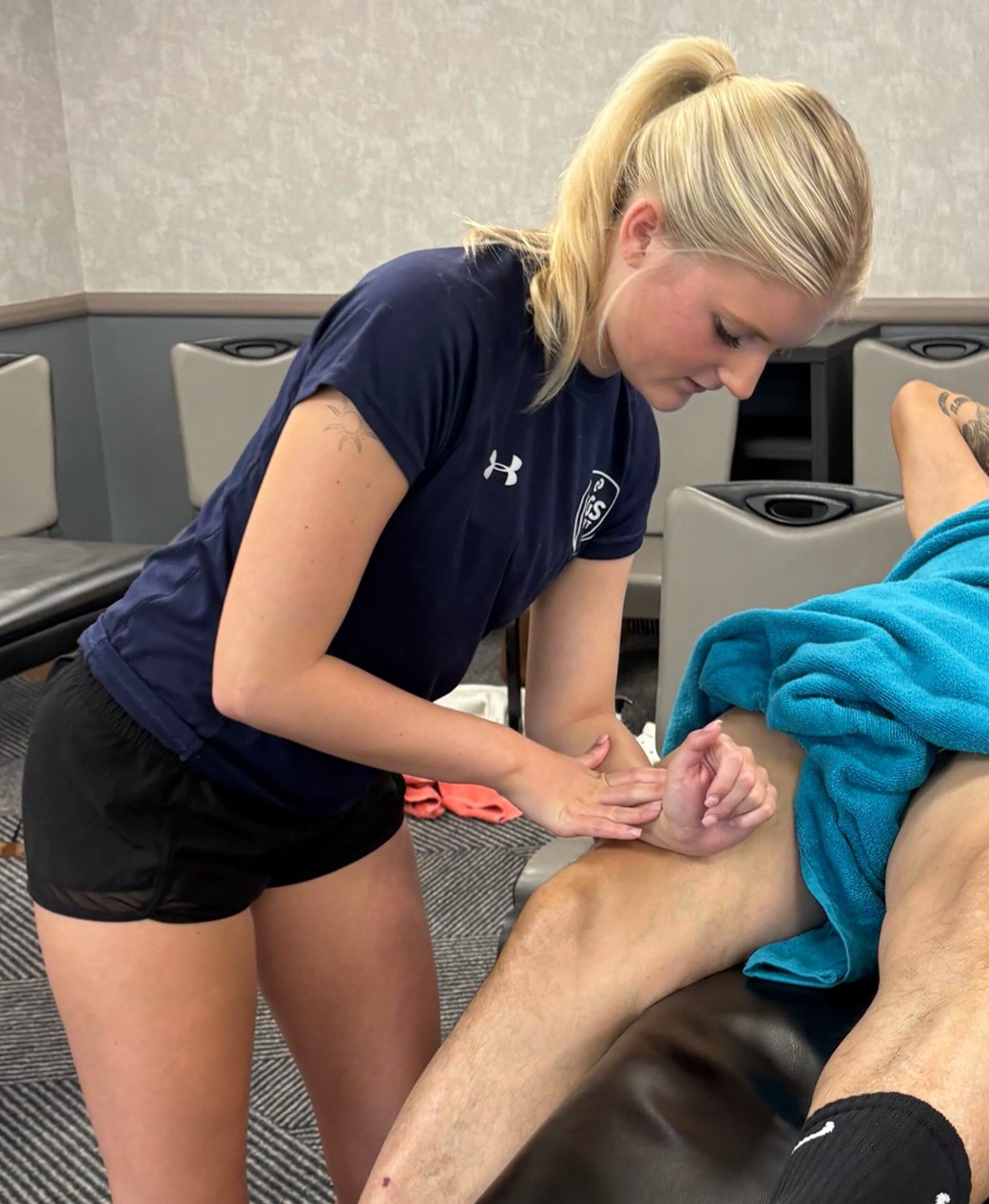
To target specific structural issues within the muscle, therapists use ironing and frictions. Ironing is designed to compress and lengthen muscle fibres. This can be done as a “free movement” along the length of the muscle or as a “pin and stretch” technique. In a pin and stretch, the therapist fixes one portion of the muscle belly in place and then stretches the rest of the muscle away from that fixed point, providing a targeted release.
Frictions are performed transversely, meaning the therapist moves across the fibres of the muscle rather than along them. This technique is specifically used to lengthen, relax, and release what are often referred to as “naughty bands”—localized areas of tension or scar tissue that can limit range of motion.
Stimulation and the Pre-Event Massage
Not all massage is designed to be calming. Tapotement techniques are high-tempo, rhythmic strokes used primarily in pre-event settings to stimulate the nervous system and “wake up” the body for activity. Common variations include:
In a pre-event context, the therapist performs these techniques—along with fast effleurage and wringing—at a significantly higher speed and lighter depth than usual to prime the athlete for immediate performance.
The Art of the Post-Event Recovery
Following an event or a heavy training session, the approach shifts to a hybrid post-event massage. The goal here is recovery without causing additional trauma to muscles that may already be sore or fatigued. The therapist starts with light effleurage and gradually builds to a deeper pressure that is firm but carefully monitored to ensure it is not “too tender”.
During post-event work, therapists must also be mindful of their own body mechanics, lunging with their legs to transfer weight through the arms rather than relying solely on upper-body strength. A unique technique often saved for the end of a post-event session is skin rolling. Because there is less oil on the skin by the end of the session, the therapist can more easily “pick up” a triangle of tissue between the thumbs and fingers, rolling it to improve tissue mobility.
By carefully selecting and timing these techniques—from the preparatory stimulation of tapotement to the restorative glides of post-event effleurage—therapists can provide athletes with the comprehensive soft-tissue support they need to succeed and recover.